
The Most Paws-itively Hilarious Veterinary Puns (60 and Counting)
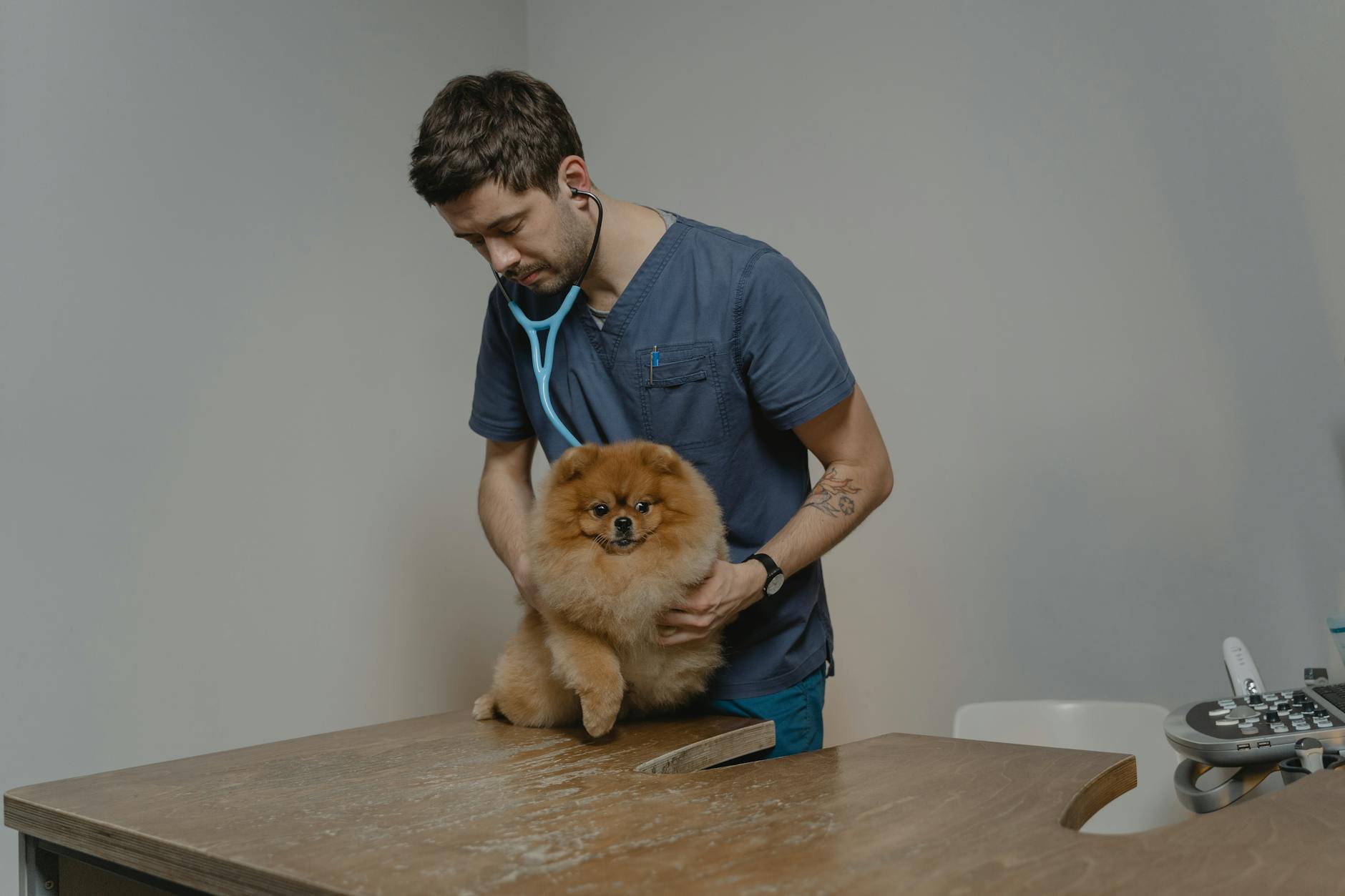
My partner’s a vet, and I’ve spent enough time around that clinic to know two things: animal people are unhinged in the best possible way, and...

Here’s the thing about searching for examples of puns. Most results give you a list of 150 puns, you exhale sharply through your nose at maybe three of them, and you leave. You don’t actually understand puns any better than when you arrived. You just consumed some like potato chips.
I want to do something different. I want to show you examples of puns, yes, but I also want you to understand why they work, what types exist, and how to tell a great pun from one that deserves the groan it gets. Because puns aren’t all the same. Not even close.
A pun, at its core, is a joke that exploits the fact that language is beautifully, hilariously imprecise. Words sound like other words. Words mean multiple things. And a good pun finds the gap between those meanings and lives there, grinning at you.
Most examples of puns fall into three main categories. Think of these as your pun starter pack.
1. Homophonic puns exploit words that sound alike but mean different things. These are probably what you picture when someone says “pun.” Example: “The pony couldn’t sing because it was a little hoarse.” Hoarse. Horse. Same sound, completely different meanings. Your brain processes both simultaneously, and that collision is the joke.
Or this one, which I genuinely love: “Reading while sunbathing makes you well-red.” You hear “well-read” (as in knowledgeable) but the sentence is actually about turning red from sunburn. The pun lives in that split second where your brain holds both meanings at once. That’s the magic moment.
2. Homographic puns use words that are spelled the same but have different meanings. “Stories keep us going up in the world.” Stories as in narratives. Stories as in floors of a building. Same word, same spelling, two completely different meanings sitting right next to each other pretending they don’t know each other at a party.
3. Compound puns (sometimes called double puns) pack multiple wordplay moments into a single sentence. They’re the show-offs of the pun world, and I respect that. These are harder to pull off, which is why they’re rarer in the wild.
If puns had a MVP, it’d be the double meaning. This is the structure behind probably 60% of all examples of puns you’ll encounter. One word, two meanings, and a sentence carefully engineered so both meanings are technically valid.
“The thief who stole a calendar got twelve months.” Months as in a prison sentence. Months as in, you know, the things on a calendar. It’s clean. It’s efficient. It’s the kind of pun your dad texts you at 7am on a Saturday, and honestly? It works.
“I’m a dentist, so I know the drill.” Drill as in a dental tool. Drill as in a routine or familiar procedure. This one’s almost too clean. It barely registers as a pun because the double meaning slides in so smoothly. That’s actually a sign of a good pun, tbh. The best ones don’t make you work for it.
Then there’s this slightly spicier example: “The butcher backed into the meat grinder and got a little behind in his work.” Behind as in his, well, behind. Behind as in falling behind schedule. This one’s technically a double entendre (a pun’s slightly scandalous cousin), and it earns its groan honestly.
“You have to be odd to be number one.” Odd as in strange. Odd as in not divisible by two. This one often gets attributed to Dr. Seuss, and whether or not he actually said it, it’s a perfect example of how a double meaning pun can feel almost philosophical if you frame it right.
This is a word that looks like it was assembled by a cat walking across a keyboard, but it describes one of the most satisfying forms of wordplay. A paraprosdokian sets up an expectation in the first half of a sentence and then completely reinterprets it in the second half.
The greatest example of this, possibly in all of English:
“Time flies like an arrow; fruit flies like a banana.”
Read that first clause: “Time flies like an arrow.” Okay, sure. Time passes quickly. Normal simile. Now read the second: “fruit flies like a banana.” Your brain initially tries to parse it the same way (fruit passes quickly like a banana?) but then it clicks. Fruit flies. The insects. They like bananas. The entire grammatical structure of the sentence just shapeshifted on you.
That’s attributed to Groucho Marx, and if he didn’t actually say it, he should have. It’s doing so much work. “Flies” changes from a verb to a noun. “Like” changes from a preposition to a verb. The whole sentence restructures itself in your head. It’s not just a pun. It’s a linguistic magic trick.
Here’s a simpler paraprosdokian: “Well, to be frank, I’d have to change my name.” The setup makes you think “frank” means honest. The punchline reveals it’s a proper noun. Quick, clean, effective.
If you think puns are just for joke books and refrigerator magnets, allow me to introduce you to basically all of English literature before the 20th century. Shakespeare was an absolute menace with puns. He couldn’t stop. Scholars have counted over 3,000 puns across his works, and some of them are filthy.
But my favorite literary pun example comes from Lewis Carroll’s Alice’s Adventures in Wonderland: “You see the earth takes twenty-four hours to turn on its axis.” The Duchess immediately jumps in: “Talking of axes, chop off her head!”
“Axis” becomes “axes.” It’s a homophonic pun, sure, but Carroll deploys it as character work. The Duchess is unhinged, and her willingness to leap from astronomy to decapitation based on a sound similarity tells you everything about her. That’s what literary puns do at their best. They’re not just jokes. They reveal character, create irony, or layer meaning into a scene.
Shakespeare’s puns work the same way. When Mercutio is dying in Romeo and Juliet and says “Ask for me tomorrow, and you shall find me a grave man,” the pun on “grave” (serious vs. burial site) isn’t just wordplay. It’s a dying man making a joke about his own death. It’s heartbreaking and funny at the same time. That’s what puns can do when a master is driving.
Puns don’t exist in isolation. They’re part of a bigger family of wordplay, and understanding the relatives helps you appreciate the whole clan. Here are some of the cousins you’ll run into when looking at examples of puns.
Spoonerisms swap the initial sounds of words. “The lord is a shoving leopard” instead of “the lord is a loving shepherd.” Named after Reverend William Archibald Spooner, who allegedly did this constantly, though historians debate how many he actually committed vs. how many were attributed to him because it was too funny to stop.
Malapropisms substitute a word with a similar-sounding but wrong one. Calling a wealthy tycoon a “wealthy typhoon.” The humor comes from the speaker not realizing the mistake, which is why malapropisms are usually funnier when a character does them than when you do them on purpose.
Portmanteaus smash two words together to create a new one. “Brunch” (breakfast + lunch) is the most famous example, and it’s so successful that people forget it’s wordplay at all. When a portmanteau pun works, it enters the language and stops being funny. When it doesn’t work, you get stuff like “guesstimate,” which has been annoying people since the 1930s and shows no signs of stopping.
Palindromes read the same forwards and backwards. “Madam, I’m Adam.” Or the legendary “A man, a plan, a canal: Panama!” These aren’t puns in the strict sense, but they’re wordplay that scratches the same itch, and they show up in every pun collection, so we’re gonna acknowledge them.
Some examples of puns rely not on meaning but on the physical experience of saying them. These are the puns you feel as much as understand.
Alliteration repeats initial consonant sounds. “She sells seashells by the seashore” isn’t technically a pun, but it’s wordplay that functions similarly. The repetition of the “sh” and “s” sounds creates a pattern your brain finds satisfying, and tongue twisters exploit this by making that satisfaction hard to achieve.
Assonance repeats vowel sounds: “Leave the cleaver for the skeevy beaver.” That “ee” sound bouncing through the sentence creates a kind of internal music. Poets use this constantly. Rappers use it even more.
Consonance repeats consonant sounds: “Look! The crook took cook books!” All those hard “k” sounds create a rhythm that’s almost percussive. It’s wordplay as texture rather than meaning.
Okay. Opinion time. Not all puns are created equal, and I’ll die on this hill.
A good pun has a tight connection between its two meanings. Both interpretations should feel relevant to the sentence. “The thief who stole a calendar got twelve months” works because the setup (stealing a calendar) connects logically to both meanings of the punchline (months on a calendar, months in prison). Neither meaning feels forced.
A bad pun stretches so far for the wordplay that the sentence stops making sense in either interpretation. I won’t name examples because I’m not a monster, but you know the ones. The puns where you can feel the writer contorting the sentence into unnatural shapes just to land the double meaning. If you have to explain why the sentence works in its literal reading, the pun has failed.
A great pun does something a good pun doesn’t. It surprises you. It reframes the entire sentence. It makes you see a word you’ve used a thousand times in a completely new way. “Time flies like an arrow; fruit flies like a banana” is great because it doesn’t just play on one word. It restructures your understanding of how English grammar works. For one glorious second, your brain breaks, and that’s the funniest thing a pun can do.
This is the eternal question. If puns are clever (and they are), why do they make people groan instead of laugh?
A few theories. First, puns are transparent. You can see the mechanism. With most jokes, the craft is hidden. With a pun, you can see exactly how it was built, and that visibility makes it feel less like comedy and more like a magic trick where someone shows you how it’s done. The groan is your response to being shown the wires.
Second, puns are often delivered with a certain energy. The punner knows what they’ve done. They’re watching your face. They’re waiting for the reaction. That anticipation is part of the experience, and the groan is actually the correct response. It’s not rejection. It’s participation. The groan is the pun’s applause.
Third, and this is the real one, ngl: puns work on a level that’s more intellectual than emotional. They make you think rather than feel. A great joke builds tension and releases it. A pun just shows you a clever connection between two meanings. The satisfaction is cerebral, and the groan is your body’s way of expressing that particular flavor of amusement.
Puns are the most democratic form of humor. You don’t need timing, delivery, or stage presence. You just need to notice that “hoarse” sounds like “horse” and build a sentence around it. That accessibility is why people love them, why people hate them, and why they’ve been a cornerstone of wordplay for literally thousands of years. (Ancient Sumerian puns exist. This is not a new problem.)
The best examples of puns are the ones where both meanings illuminate something true. Where the collision of definitions creates a tiny, perfect joke that couldn’t exist in any other language, in any other arrangement of words. They’re little miracles of coincidence, and the fact that we can spot them and laugh at them is one of the better things about having a human brain.
Now go forth and make people groan. They’ll secretly love it.
My partner’s a vet, and I’ve spent enough time around that clinic to know two things: animal people are unhinged in the best possible way, and...
So What Does “No Pun Intended” Actually Mean? Let’s start with the obvious.
Kitchens are honestly the funniest rooms in any house and nobody talks about it enough.
Lettuce is the funniest vegetable and I will die on this hill.
Get the week's freshest puns, wordplay, and gloriously terrible jokes delivered straight to your inbox — no setup required.
By signing up, I agree to the Terms of Use and have reviewed the Privacy Policy.