
The Most Dead-icated Zombie Puns (61 and Counting)
Zombie puns are the one category of wordplay where the bar is literally underground.

A pun is a joke that exploits the fact that some words sound alike, look alike, or have multiple meanings. That’s it. That’s the whole trick. You take a word that could mean two things, and you force the listener’s brain to process both meanings at once. The collision between those meanings is where the humor lives.
Here’s probably the most famous example structure in the world: “I tried to tell a pun about a broken pencil, but it was pointless.” The word “pointless” means both “having no point” (like a broken pencil) and “futile, without purpose.” Your brain catches both meanings simultaneously, and that tiny cognitive hiccup is the laugh. Or the groan. Honestly, with puns, it’s often both.
People have been making puns for literally thousands of years. Shakespeare was obsessed with them. The ancient Romans loved them. Your uncle at Thanksgiving won’t stop making them. Puns are probably the oldest form of joke that still works in modern conversation, which is either a testament to their brilliance or evidence that we haven’t evolved as much as we think.
Not all puns work the same way, and understanding the different types helps you appreciate why some land beautifully and others make you want to leave the room. There are three major categories, and once you learn them, you’ll start noticing them everywhere. I’m sorry in advance.
Homophonic puns rely on words that sound the same but have different meanings or spellings. These are the workhorses of the pun world. “Studying homophones for pun examples can be quite a feat, or should I say, a ‘feet’?” See, “feat” and “feet” sound identical, but one means an accomplishment and the other means those things at the bottom of your legs. The humor comes from the switcheroo.
Homographic puns use words that are spelled the same but have different meanings. Think about the word “bark.” A dog barks. A tree has bark. If someone says “the dog’s favorite tree has the best bark,” both meanings are technically true and your brain has to hold them both at once. These puns tend to be a little more subtle, which makes them either more sophisticated or more annoying depending on your tolerance level.
Compound puns (sometimes called recursive puns) pack multiple puns into a single statement. They’re the show-offs of the pun family. They require more setup and more audience goodwill, but when they work, they really work. These are the ones where you catch the first pun, then realize there’s a second one hiding underneath, and you do a genuine double take. That “double take” itself plays on the idea that puns always carry double meanings, which, hey, look at that. Puns about puns. We’re already deep in it.
Here’s where I get opinionated. Not all puns are created equal, and I will die on this hill.
The best puns feel effortless. They emerge naturally from conversation, and the double meaning hits you a half-second after the sentence ends. The worst puns are the ones where you can see the scaffolding. Where someone has clearly reverse-engineered a sentence just to arrive at the wordplay, and the whole thing feels like a hostage situation where the punchline is holding the setup at gunpoint.
Take the phrase “I guess that’s my pun-ishment for trying to explain puns.” Is it clever? Kinda. Does it make you laugh? Probably not. But it makes you acknowledge the wordplay, which is a different thing entirely. Pun-based humor exists on a spectrum between genuine laughter and reluctant acknowledgment, and honestly, a lot of pun enthusiasts are perfectly happy living at the “reluctant acknowledgment” end. The groan IS the reward for them.
The really good examples of pun in everyday life tend to be contextual. They arise from a specific situation and couldn’t have been planned. Someone drops a loaf of bread and says “well, that’s the yeast of my problems.” That works because it’s spontaneous. Write it on a greeting card and it loses 60% of its power.
If you think puns are lowbrow, you haven’t been reading the right books. Or rather, you’ve been reading them without paying attention to how often the greatest writers in the English language leaned on wordplay.
Shakespeare was a serial punner. In Romeo and Juliet, the dying Mercutio says “Ask for me tomorrow, and you shall find me a grave man.” He means “serious,” but he also means he’ll literally be in a grave. It’s a pun delivered by a dying character, and it somehow manages to be funny, tragic, and character-defining all at once. That’s what separates a master from your uncle. Shakespeare’s puns do narrative work. They reveal character. They operate on multiple levels simultaneously.
Oscar Wilde was another relentless punster. His play The Importance of Being Earnest is built entirely on a pun. The name “Ernest” and the adjective “earnest” (meaning sincere and serious) are the engine of the whole plot. Characters literally change their names to be “Ernest” so they can be considered “earnest.” The entire play is a compound pun stretched across three acts, and it’s been making audiences laugh since 1895.
Even in more modern literature, puns show up constantly. Terry Pratchett built an entire career partly on layered wordplay. Douglas Adams was another master. These writers understood something that bad pun-makers don’t: the pun should serve the story, not the other way around. Every pun has a deeper meaning, or at least two surface meanings, and the best literary puns make both of those meanings do something useful.
Puns behave differently in different cultures, and this is where things get genuinely interesting from a linguistics perspective.
In English, puns are often considered the “lowest form of wit,” a phrase usually attributed to Samuel Johnson (though the attribution is shaky). There’s a long tradition of apologizing for puns even as you make them. You deliver the pun, then you wince. The wince is part of the performance. It’s a weird cultural ritual if you think about it. No one apologizes for telling a knock-knock joke.
In Japanese, puns (called “dajare”) are a huge part of everyday humor. The Japanese language, with its relatively small number of distinct syllables, produces an enormous number of homophones, which makes punning almost unavoidable. Dajare are sometimes called “oyaji gyagu” (dad jokes), which tells you that the “dad joke” phenomenon is not uniquely American. Dads worldwide are apparently united in their commitment to terrible wordplay.
In Chinese, puns carry serious cultural weight. During Lunar New Year, certain foods are served specifically because their names sound like auspicious words. Fish is served because the word for fish (“yú”) sounds like the word for surplus or abundance. That’s a pun baked into a cultural tradition. Nobody groans at it. It’s just how the language and the culture interact.
This is what I find fascinating about collecting examples of pun across cultures. The mechanism is always the same (exploit a double meaning), but the social function varies wildly. In some contexts, puns are throwaway jokes. In others, they’re carrying real symbolic weight.
Here’s something that’s always bugged me. Why do puns make people groan instead of laugh? Like, what is it about this specific type of joke that produces a physical reaction of mock-pain?
There’s actually some interesting research on this. A 2015 study in the journal Laterality found that processing puns activates both hemispheres of the brain, unlike most other forms of humor which tend to be more right-hemisphere dominant. Your brain is doing extra work. The groan might literally be a response to cognitive effort. You’re not annoyed because the joke is bad. You’re annoyed because your brain had to work harder than it wanted to for a payoff that felt small.
But here’s the thing. That groan? It’s still a reaction. And in comedy, a reaction is a reaction. Ngl, I’d rather get a groan than silence. Silence means the joke didn’t register at all. A groan means it landed. It just landed on someone’s foot.
This is why pun enthusiasts are so persistent. They’re not oblivious to the groans. They’re feeding on them. Only true pun-dits can appreciate this dynamic, where the audience’s suffering is actually proof of success.
If you’ve made it this far, you probably want to know how to make puns that are actually good. Or at least less groan-worthy. Here’s what I’ve learned from years of studying (and committing) wordplay.
Timing matters more than the words. A pun delivered too early in a conversation feels forced. A pun that arrives at exactly the right moment, where the double meaning feels almost accidental, is gold. The best pun is one where the listener isn’t sure you meant to make it.
Don’t explain it. The second you say “get it?” you’ve killed the pun. It’s already dead. You murdered it. A pun should be a little gift you leave on someone’s doorstep. If they find it, great. If they don’t, that’s fine too. Walking them through it defeats the entire purpose.
Context is everything. The broken pencil joke works in a casual conversation. It does not work in a eulogy. (Although tbh, Mercutio pulled off a death-pun, so maybe I’m wrong. But you’re not Shakespeare. Sorry.)
One is plenty. The temptation with puns is to chain them together. To make one, then another, then another, until you’ve turned a conversation into a hostage situation. Resist this. One well-placed pun is a delight. Seven consecutive puns is a war crime.
Here’s what I keep coming back to whenever I look at examples of pun throughout history. These things are survivors. Entire genres of comedy have risen and fallen. Vaudeville came and went. Slapstick had its era. Observational humor cycles in and out of fashion. But puns? Puns have been with us since humans first noticed that two words sounded alike, and they’ll be with us long after every other form of joke has been replaced by whatever comedy looks like in 2126.
They work because they exploit something fundamental about how language operates. Words are imprecise. They overlap. They collide. A single sound can carry completely different meanings depending on context, and puns just shine a spotlight on that beautiful mess. When someone says “these puns make no sense, or do they make double sense?” they’re actually describing something real about how language functions. Every word is a little unstable, a little ambiguous, and puns are what happens when you poke at that instability on purpose.
So the next time someone hits you with a pun and you feel that groan building in your chest, take a second before you let it out. Appreciate the architecture. Somebody found a crack in the language and wedged a joke into it. That’s not the lowest form of wit. That’s engineering.
And if you still groan after all that? Well. I guess that’s your pun-ishment.
Zombie puns are the one category of wordplay where the bar is literally underground.
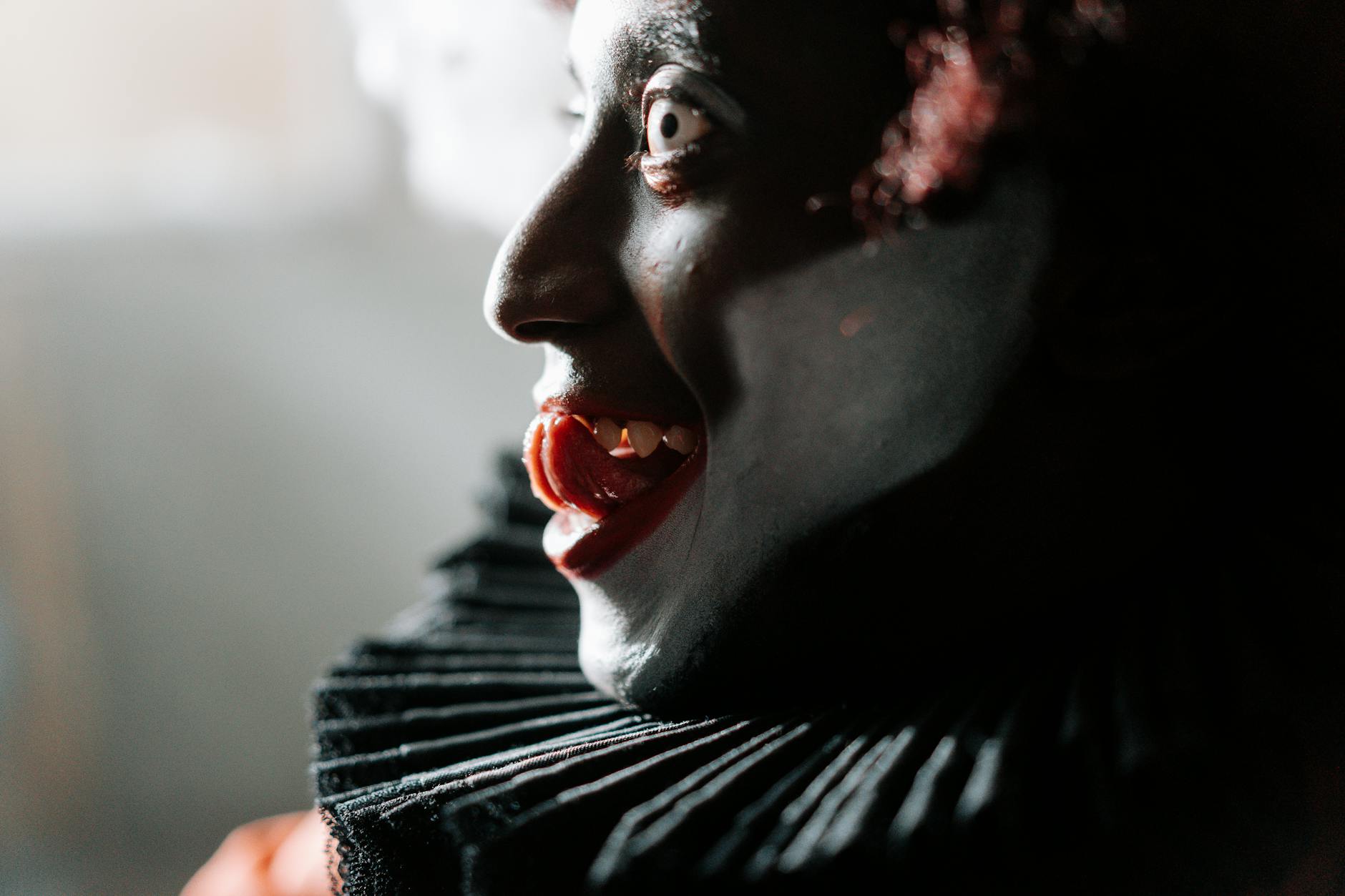
Vampires have been culturally relevant for like 400 years and honestly they’ve earned it.
Death is objectively the funniest topic to make puns about, and I will not be taking questions on this.
Fat puns are one of those categories where you start out thinking “oh this’ll be easy” and then twenty minutes later you’re...
Get the week's freshest puns, wordplay, and gloriously terrible jokes delivered straight to your inbox — no setup required.
By signing up, I agree to the Terms of Use and have reviewed the Privacy Policy.