

64 Bus Puns That’ll Drive You to the Back Seat
I’ve been riding public transit for most of my adult life, and at some point you either develop a sense of humor about it or you lose your mind...
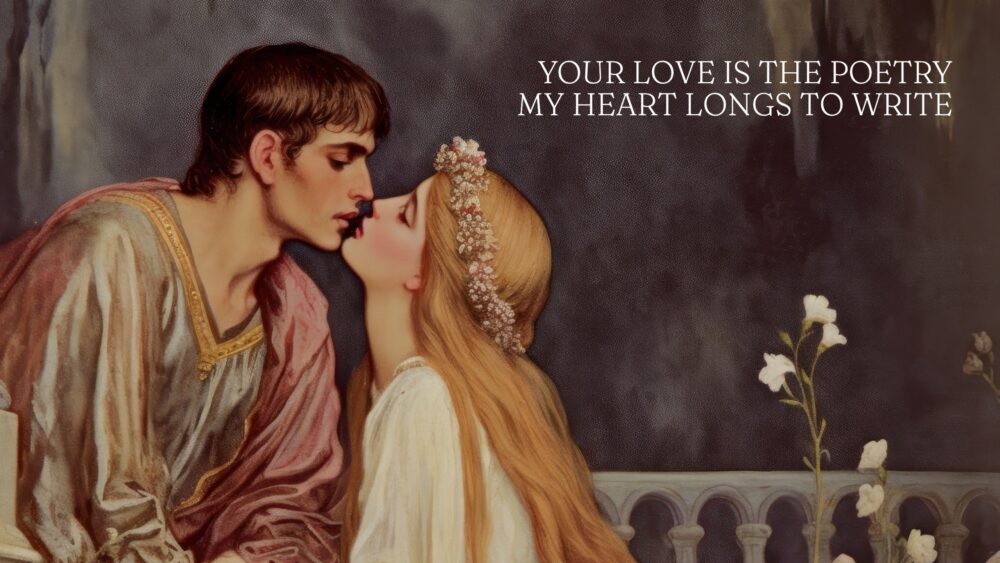
Shakespeare was a lot of things. Poet. Playwright. Inventor of words we still use four centuries later. But here’s the thing people don’t always appreciate: the man was an absolute pun addict. And nowhere is that addiction more obvious than in Romeo and Juliet, a play that’s supposedly about tragic love but is secretly about how many jokes you can cram into a five-act tragedy before the audience catches on.
If you searched for “pun in Romeo and Juliet,” you’re probably either studying the play or you noticed something weird going on with the language and wanted confirmation. Either way, you’re in the right place. Because this play is absolutely loaded with wordplay, and understanding it changes how you read the whole thing.
A pun is when a word or phrase exploits multiple meanings or similar sounds for comic (or sometimes dramatic) effect. That’s the textbook version. The real version is: a pun is when you make language do a little trick, and some people groan and some people laugh and you feel great about yourself either way.
There are a few types worth knowing about, especially if you’re trying to decode Shakespeare:
Homophonic puns use words that sound alike but mean different things. “I’d tell you a joke about pizza, but it’s too cheesy.” The word “cheesy” means both literally made of cheese and figuratively corny. Classic double duty.
Homographic puns use words that are spelled the same but have different meanings. Think of the word “grave.” It can mean serious. It can also mean, you know, a hole in the ground where you bury someone. (Hold that thought. We’re gonna need it.)
Compound puns pack multiple puns into a single phrase, or stretch a pun across several words. These are the show-offs of the pun world. Shakespeare loved them.
Now let’s talk about why a 16th-century playwright cared so much about wordplay in a story where two teenagers die.
Here’s some context that helps: in Elizabethan England, punning wasn’t considered lowbrow. It was a sign of intelligence. Wit was social currency, and the ability to twist language on the fly meant you were sharp, educated, and entertaining. Shakespeare wasn’t just being silly. He was showing off, and his audience expected it.
Every act of Romeo and Juliet is a scene of brilliant wordplay. And I mean that literally. “Act” and “scene” are both theater terms, but they also mean an action and a spectacle. Shakespeare was always playing on multiple levels like that. The structural vocabulary of the play is itself a kind of meta-joke about performance.
But beyond cultural expectation, the puns in Romeo and Juliet serve real dramatic purposes. They reveal character. They control tone. They do actual work. Let’s look at how.
If there’s one character in Romeo and Juliet who lives and breathes wordplay, it’s Mercutio. This guy puns the way other people breathe. Constantly and without thinking about it.
His most famous pun is also his last. After being stabbed by Tybalt, Mercutio says: “Ask for me tomorrow, and you shall find me a grave man.” He’s dying. Literally dying. And he can’t resist the joke. “Grave” as in serious. “Grave” as in where they’re about to put his body. It’s a homographic pun, and it’s perfect, because it tells you everything about Mercutio in one line. His wit was so sharp it could witness a duel of words and win, even when the duel of swords had already killed him.
This is what separates a great pun from a bad one, by the way. Mercutio’s “grave man” line isn’t just clever. It’s heartbreaking. The humor makes the tragedy hit harder. You laugh, and then you realize he’s actually dying, and suddenly the laugh feels like it’s stuck in your throat. That’s masterful writing.
Early in the play, Romeo is moping around because he’s in love with Rosaline (remember her? the one before Juliet? yeah, Romeo moved fast). His friends want him to go to the Capulet party, and when they suggest dancing, Romeo says he’s too heavy-hearted. His “soul” is weighed down.
Mercutio, naturally, can’t let this slide. He plays on the homophone: “soul” (the spirit, the inner self) and “sole” (the bottom of your shoe). The joke is that Romeo’s soul might be heavy, but his soles should still be able to dance. It’s a homophonic pun, and it does something really smart. It deflates Romeo’s melodrama. Mercutio is essentially saying, “Dude, you’re being ridiculous. Get up and dance.”
This is one of the things puns do best in Shakespeare. They puncture pretension. Romeo is trying to be this brooding, poetic lover, and Mercutio just cuts right through it with a shoe joke.
The play opens with two Capulet servants, Sampson and Gregory, trading puns back and forth. They riff on “collier” (coal miner), “choler” (anger), and “collar” (as in a hangman’s noose). It’s rapid-fire wordplay, and it does two things at once: it sets the comedic tone of the play’s first half, and it establishes that even the lowest-ranking characters in Verona are obsessed with verbal sparring.
They also make a bunch of puns about “maidenheads” and “standing” and “thrusting” that are, let’s say, not subtle. Shakespeare wrote for a broad audience (pun not intended but I’ll take it), and bawdy wordplay kept the groundlings entertained. The Capulets and Montagues were always letting their tempers get the best of them, but their servants were letting their innuendos get the best of everyone else.
This is the question that trips people up. Romeo and Juliet is a tragedy. People die. Families are destroyed. So why is it so funny for the first two and a half acts?
The answer is contrast. Shakespeare front-loads the play with comedy, wit, and lightness so that when things go dark, they go really dark. Mercutio’s death is the turning point, and it’s no coincidence that the play’s greatest punster is the first major character to die. When Mercutio stops joking, the jokes stop. The play’s ending is poisonous in both senses. The literal poison that kills Romeo, and the toxic, intoxicating spiral of events that makes the whole tragedy feel inevitable.
The puns also serve as a kind of dramatic irony. Characters joke about death, love, and fate without realizing how literally their words will come true. When Romeo talks about his heavy soul before the party, he doesn’t know he’s about to meet the girl who will, in fact, be the death of him. The wordplay is funny on the surface and devastating underneath.
The Nurse is another character who loves wordplay, though hers is different from Mercutio’s. Where Mercutio is sharp and deliberate, the Nurse is rambling and accidental. Her long-winded speeches are a real pun-ishment for some readers but a delight for others. She makes bawdy jokes, she goes on tangents, she repeats herself. Her humor is earthy and physical where Mercutio’s is intellectual and quick.
This matters because it tells you about class and education in the play. Mercutio is a gentleman. The Nurse is a servant. They both pun, but they pun differently, and Shakespeare uses that difference to sketch their social positions without ever having to explain it directly.
Not all the puns in Romeo and Juliet are laugh-out-loud jokes. Friar Laurence speaks in a lot of double meanings that are more thematic than comic. His advice was often fairly good (Friar-ly good, if you will), even if it led to tragedy. He talks about plants that can both heal and poison, about the “two such opposèd kings” that live in every herb. This isn’t punning for laughs. It’s punning for meaning. The double nature of his language mirrors the double nature of everything in the play: love and hate, comedy and tragedy, life and death.
Shakespeare really knew how to shake a spear of wit into his tragedies. (Sorry. Had to.) But the point stands. The wordplay isn’t decoration. It’s architecture.
Even character names get the pun treatment. Mercutio calls Tybalt the “Prince of Cats,” a reference to a cat character named Tybert in a popular medieval story. But he also riffs on the name in ways that suggest aggression and volatility. Tybalt was a hothead, always ready to tie a bolt of anger at Romeo, if you stretch the sounds a bit. The name itself becomes part of the joke.
Shakespeare was deeply aware of how names sound, and he used that awareness constantly. The star-crossed lovers live in Verona, their love was ill-fated from the start, but the wordplay Shakespeare built around them is genuinely star-studded. He couldn’t resist making everything do double duty.
Here’s where I have opinions. A good pun earns its double meaning. It doesn’t just sound like another word. It makes you see both meanings simultaneously, and both meanings matter. Mercutio’s “grave man” is a good pun because both meanings (serious and burial) are relevant to the moment. It works on every level.
A bad pun just sounds like another word and calls it a day. “Verona? More like Very-own-a kind of special!” Nah. That’s just phonetic mush. It doesn’t illuminate anything. It doesn’t reveal character or advance theme. It’s just noise shaped like cleverness.
Shakespeare occasionally wrote puns that haven’t aged well, tbh. Some of his wordplay relies on Elizabethan pronunciation that we’ve lost, so modern readers miss the joke entirely. Others are so bawdy that you need footnotes to catch the innuendo. But his best puns? They still land perfectly in 2026, four hundred years later. That’s because they’re built on universal human experiences: the gap between what we say and what we mean, the way humor masks pain, the absurdity of being alive and knowing you’ll die.
If you’re reading Romeo and Juliet and the puns feel like distractions, I’d gently suggest you’re reading the play wrong. The puns aren’t interruptions to the story. They are the story, or at least a vital part of how Shakespeare tells it. They establish character, control pacing, create irony, and make the eventual tragedy feel earned.
Mercutio dies and the puns die with him. That’s not an accident. That’s a playwright telling you, through the absence of humor, that everything has changed. Romeo’s banishment from Verona felt like a punishment for his rash actions, and the play punishes the audience too, by taking away the laughter we’d gotten comfortable with.
Despite the tragedy, the play is a wonderful (pun-derful, if you’re feeling generous) example of Shakespeare’s genius. He understood something that a lot of writers still struggle with: comedy and tragedy aren’t opposites. They’re dance partners. And puns, those little linguistic tricks that make people groan at dinner parties, were one of his favorite ways to get them on the floor together.
So next time someone tells you puns are the lowest form of humor, tell them Shakespeare disagrees. And he’s been outselling everyone for four centuries, so maybe he knows something.
I’ve been riding public transit for most of my adult life, and at some point you either develop a sense of humor about it or you lose your mind...
Shaving is the one thing I do every morning where I’m holding a blade to my own throat and somehow that’s the boring part of my day.
Color is the one topic where puns basically write themselves, and yet somehow I still managed to spend three hours on this.
Ramen is the only food that I think about with the same frequency as my own mortality.
Get the week's freshest puns, wordplay, and gloriously terrible jokes delivered straight to your inbox — no setup required.
By signing up, I agree to the Terms of Use and have reviewed the Privacy Policy.