
What Is a Pun? A Define-itely Hilarious Explainer
So, What Exactly Is a Pun? A pun is a form of wordplay that exploits the multiple meanings of a word, or the fact that two different words sound alike, to...
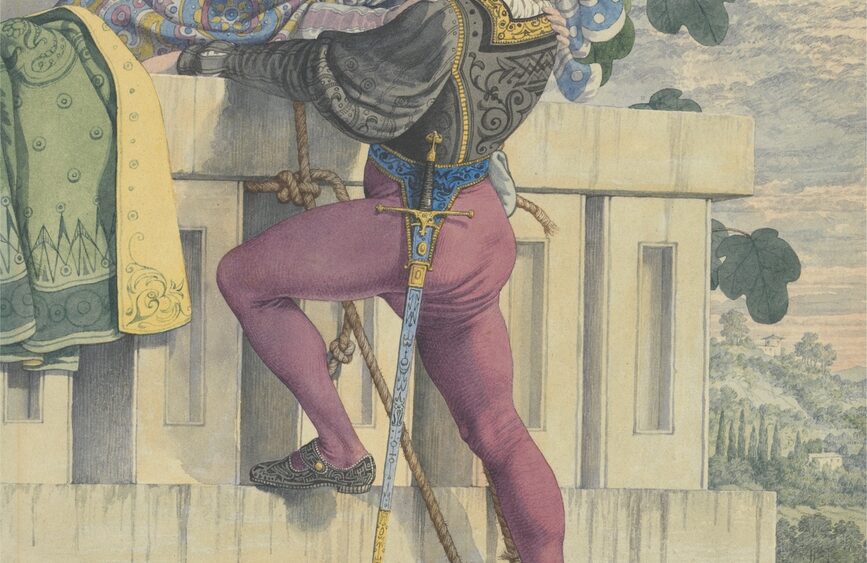
Here’s something your English teacher probably glossed over pretty quickly: the first five minutes of Romeo and Juliet are basically a stand-up routine. And not a clean one. The puns in Romeo and Juliet Act 1 are relentless, filthy, and (honestly?) kind of brilliant. Shakespeare opens his most famous love tragedy with two servants making dick jokes. On purpose. With incredible linguistic precision.
If you’re reading Act 1 and thinking “wait, was that a pun?”, the answer is almost always yes. And if you’re thinking “wait, was that a sex joke?”, the answer is also almost always yes. Let’s talk about why.
Before we get into Shakespeare’s specific brand of wordplay chaos, let’s get our terms straight. A pun exploits multiple meanings of a word (or words that sound alike) to create a second layer of meaning, usually for comic effect. There are a few flavors:
Homophonic puns use words that sound the same but mean different things. Think “I used to be a banker, but I lost interest.” Two different meanings of “interest,” same sound. This is the classic, bread-and-butter pun.
Homographic puns use words that are spelled the same but have different meanings. “I’m reading a book about anti-gravity. It’s impossible to put down.” The word “put down” looks the same on the page but means two totally different things.
Compound puns chain multiple puns together in a single phrase or passage, building one on top of another like some kind of wordplay Jenga tower. This is Shakespeare’s absolute favorite move in Act 1, and he does it with an almost obnoxious level of skill.
The play opens with two Capulet servants, Sampson and Gregory, strutting around looking for trouble. And within their first few lines, Shakespeare drops one of the most densely packed pun sequences in English literature.
Sampson says he won’t “carry coals,” meaning he won’t endure insults (a common Elizabethan expression for tolerating humiliation). Gregory picks up the thread and runs with it. From “coals” we get “collier” (a coal miner, but also associated with being dirty or dishonest). From “collier” we jump to “choler” (anger). And from “choler” we land on “collar” (as in a hangman’s noose).
Four words. Four different meanings. All connected by sound. Sampson’s “choler” was so high, he almost burst his “collar” trying to pick a fight. It’s a cascade, each pun triggering the next one like dominoes. Shakespeare is showing off here, and honestly? He’s earned it.
What makes this sequence really clever is that it’s not just wordplay for the sake of wordplay. The chain takes us from a petty insult (“carry coals”) to a death threat (“collar” as noose) in four steps. It mirrors the entire plot of the play, where petty grudges escalate to death. In four words, Shakespeare tells you everything you need to know about where this story is going.
Okay. Let’s talk about the sex puns. Because there are a LOT of them.
Sampson brags about his “naked weapon” being out, which refers to his drawn sword and, well, you can figure out the other meaning. This is a textbook double entendre, a phrase that works on two levels simultaneously. The surface meaning (sword) is innocent enough. The second meaning (not a sword) is very much not.
Then Sampson announces he’ll “thrust” the Montague maids “to the wall.” On the surface, he’s talking about winning a fight, shoving his enemies against a wall. Below the surface, he’s being exactly as crude as you think he’s being. Gregory, to his credit, seems to recognize that Sampson is wallowing in crude jokes more than making actual threats.
And then there’s the “maidenheads” exchange. Sampson talks about cutting off heads, and Gregory twists it into “maidenheads,” meaning virginity. Sampson’s threats to “cut off their heads” become a real head-scratcher for Gregory, who keeps redirecting the conversation toward increasingly sexual territory. The word “head” is doing triple duty here: literal heads, maidenheads, and the “head of the matter” (the main point).
This is Shakespeare being a true pundit of language. He’s layering meaning on top of meaning, and every single word is pulling double shifts.
There’s a stretch of dialogue where Sampson and Gregory argue about whether they’ll “stand” and fight or “move” (run away). On the surface, it’s two guys psyching each other up. But Shakespeare is playing with at least three meanings of each word simultaneously.
“Moved” means provoked (emotionally moved to anger). It means physically moving (running away from a fight). And, because this is Shakespeare and he can’t help himself, it carries a sexual connotation too. When Sampson says he’d “move” a Montague, he meant he’d stir up trouble, not just change positions. The servants were so “moved” to fight, they couldn’t “stand” still.
“Stand” means to hold your ground. It means to stand still. And it means, well, another physical state that teenage boys in the audience would’ve found hilarious in 1597 and still find hilarious in 2026.
The genius here is that the puns characterize these servants perfectly. They’re all talk. They’re blustering and bragging, using big words and bigger innuendos, and the moment actual Montagues show up, they immediately start hedging. The wordplay isn’t just funny. It reveals that these guys are cowards performing bravery.
Here’s the thing that’s easy to miss if you’re just cataloging puns for a homework assignment: the placement of all this wordplay is a deliberate structural choice.
Romeo and Juliet is a tragedy. People die. Teenagers kill themselves. It’s devastating. So why open with what amounts to a comedy routine between two servants making genital jokes?
A few reasons. First, it gets the audience’s attention. In Shakespeare’s day, the Globe Theatre was rowdy. People were eating, drinking, talking. You needed something loud and funny and a little bit shocking to get them to shut up and watch. Bawdy puns did the job.
Second, and this is the part I find genuinely brilliant, the comedy makes the tragedy hit harder. The bawdy puns in Act 1 are quite unexpected for a play that ends so tragically. Shakespeare establishes a world where language is playful, where words have double meanings, where everything is a joke. Then he slowly strips that playfulness away. By Act 5, nobody’s punning. Nobody’s laughing. The contrast is devastating because you remember how light everything felt at the beginning.
Third, the puns establish the theme of duality that runs through the entire play. Love and hate. Comedy and tragedy. Life and death. Words that mean two things at once are the perfect vehicle for a story about opposites colliding.
I know this article is about Act 1 specifically, but I can’t talk about puns in Romeo and Juliet without mentioning Mercutio, who shows up later in the act and absolutely dominates every scene he’s in with wordplay. If Sampson and Gregory are the opening act, Mercutio is the headliner.
His “Queen Mab” speech is famous, but his casual banter is where the puns really fly. He’s the character who treats language like a toy, constantly twisting words, finding double meanings in everything, refusing to take anything seriously. He’s the play’s designated punster, and Shakespeare uses him to show what happens when wit meets violence. (Spoiler: it doesn’t end well for wit.)
Even Romeo gets in on the wordplay in Act 1. His lovesick moping about Rosaline is full of oxymorons and paradoxes (“feather of lead, bright smoke, cold fire, sick health”) that function as a different kind of wordplay. Where the servants use puns to be crude and funny, Romeo uses contradictions to express genuine emotional confusion. Same technique, different purpose.
Not all puns are created equal, and ngl, even Shakespeare’s aren’t all winners by modern standards. Some of the Act 1 wordplay relies on Elizabethan pronunciations that don’t quite land in 2026. The “coals/collier/choler/collar” chain, for instance, requires all four words to sound much more similar than they do in modern English. In Shakespeare’s accent, they were nearly identical. In ours, you have to squint a little.
But here’s what separates a great pun from a groaner: the best puns in Act 1 don’t just play on sounds. They play on ideas. The “moved/stand” exchange isn’t just two words that happen to have double meanings. The double meanings are thematically relevant. The characters are literally debating whether to fight or flee, and the sexual undertones reveal their immaturity. Every layer of meaning adds something.
A bad pun is just a coincidence of sound. A good pun is a coincidence of sound that reveals a coincidence of meaning. Shakespeare’s Act 1 puns, at their best, are the second kind.
If you’re studying the puns in Romeo and Juliet Act 1 for a class, here’s what I’d focus on. Don’t just identify the puns. Any annotated edition will do that for you. Instead, ask yourself: what is each pun doing? Is it characterizing someone? Is it establishing tone? Is it foreshadowing?
The servants’ puns establish that this is a world where violence and sex are casually intertwined, where men perform masculinity through aggressive language, and where words can escalate a situation just as easily as swords can. That’s not just comedy. That’s worldbuilding.
Shakespeare was operating on multiple levels simultaneously, which is kinda the whole point of a pun in the first place. The surface meaning entertains. The hidden meaning illuminates. And if you’re only reading one level, you’re missing half the play.
So the next time someone tells you puns are the lowest form of humor, you can tell them that the greatest writer in the English language opened his most famous play with a string of them. And then he used those puns to build a structural foundation for one of the most emotionally devastating stories ever told. Not bad for a few dick jokes between servants.
So, What Exactly Is a Pun? A pun is a form of wordplay that exploits the multiple meanings of a word, or the fact that two different words sound alike, to...
I’ve been obsessed with gnome puns for longer than I’d like to admit.
Words are the only thing I’ve been consistently obsessed with since I was like eight years old and discovered you could rearrange the letters in...
War puns are one of those categories where you think you’ll run out fast and then realize, no, basically every military term is already halfway to...
Get the week's freshest puns, wordplay, and gloriously terrible jokes delivered straight to your inbox — no setup required.
By signing up, I agree to the Terms of Use and have reviewed the Privacy Policy.