
The Most Egg-cellent Brunch Puns (63 and Counting)
Brunch is the only meal where it’s socially acceptable to drink champagne at 10 AM and call it “self-care.
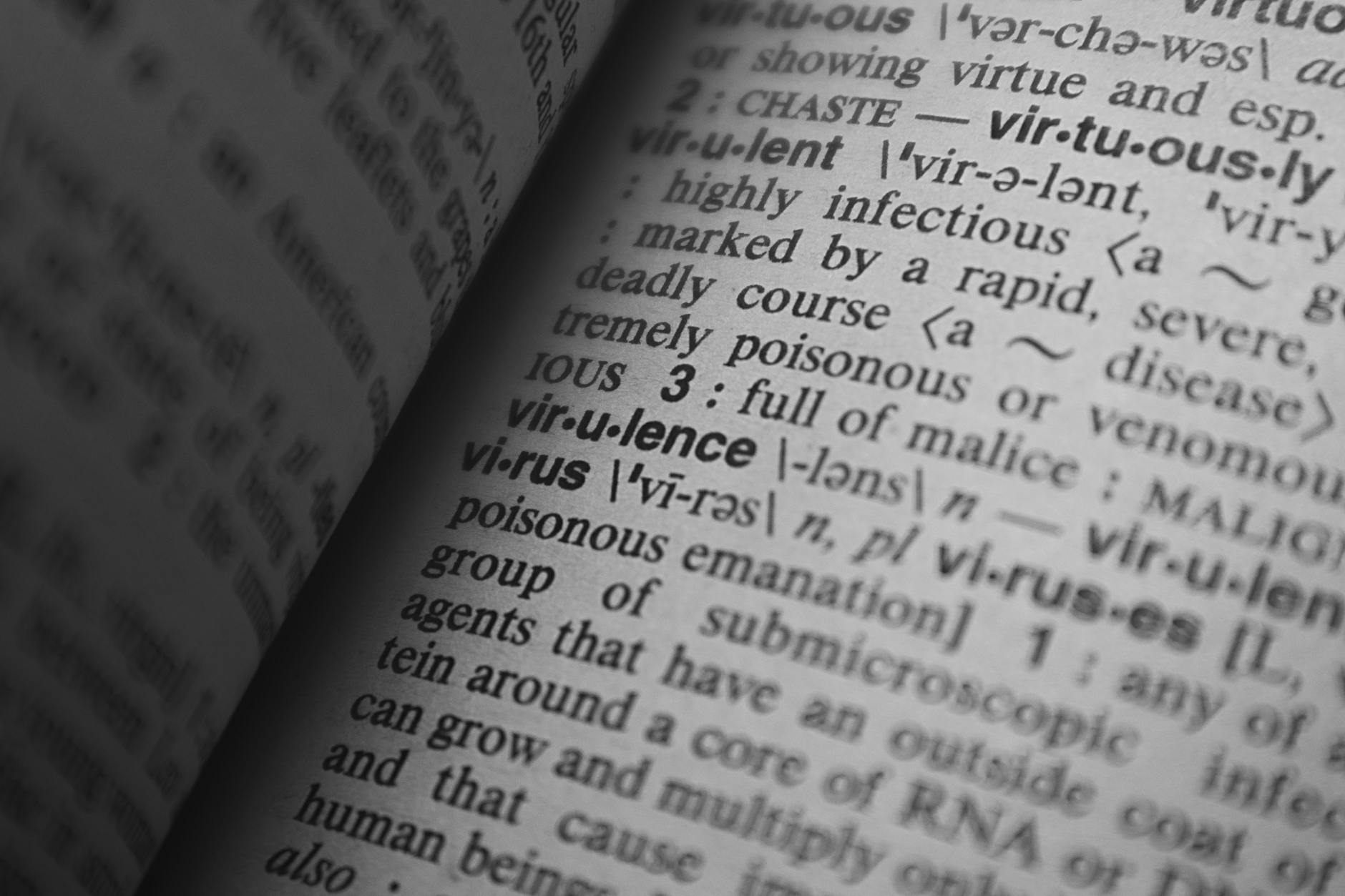
Let’s get something out of the way. A pun is, at its core, a joke that exploits the multiple meanings of a word, or the fact that two different words sound alike. That’s it. That’s the puns definition in its simplest form. If you’ve ever said something that made everyone in the room simultaneously laugh and groan, congratulations, you’ve probably committed a pun.
But that bare-bones definition doesn’t really capture what’s going on. Puns are one of the oldest, most widespread, and most polarizing forms of humor in human language. People either love them or claim to hate them (and the people who claim to hate them are usually lying, because they still laugh). So let’s actually break this thing down properly.
A pun is a form of wordplay that takes advantage of words with multiple meanings, words that sound similar, or words that can be broken apart and reassembled to create a humorous double reading. The technical term is “paronomasia,” which is a word that sounds like a disease you’d catch on vacation but is actually just Greek for “slight name change.”
The magic of a pun is that it forces your brain to process two meanings at the same time. When someone says “do puns make sense? Only if you have a few extra cents,” your brain has to hold both “sense” (understanding) and “cents” (money) in your head simultaneously. That collision of meanings is where the humor lives. Or the groaning. Often both.
What makes puns distinct from other jokes is that they’re entirely dependent on language itself. A pun doesn’t work because of a funny situation or a surprising observation about human behavior. It works because English (or whatever language you’re punning in) is a beautifully messy system full of collisions, overlaps, and happy accidents. Puns are basically the art of exploiting those accidents on purpose.
Not all puns are built the same way. There are a few distinct categories, and knowing them actually helps you appreciate (or craft) better ones.
Homophonic puns rely on words that sound the same but have different meanings and often different spellings. These are probably the most common type. “A good pun definition often ends with a groan, but it’s a sign it’s grown on you” is a clean example. “Groan” and “grown” sound identical, but they mean completely different things, and the pun forces both meanings into a single sentence. Your brain does a little somersault. Delightful.
Homographic puns use words that are spelled the same but have different meanings (and sometimes different pronunciations). Think about the word “bark.” A dog barks. A tree has bark. A homographic pun would find a way to make both meanings relevant at the same time. These tend to feel a little more sophisticated because they don’t rely on sound trickery.
Compound puns are the ambitious ones. They jam a word or phrase inside another word to create a new, punny meaning. “Trying to define a pun can feel like a pun-ishment” is a textbook compound pun. You’re literally stuffing “pun” inside “punishment.” Similarly, saying that the definition of a pun is “pun-damental to understanding humor” does the same thing. These are the puns most likely to get you pelted with dinner rolls at a family gathering, and honestly, that’s part of their appeal.
There’s also a less commonly discussed category I’d call phrasal puns, where you twist an entire idiom or common phrase. “Explaining a pun isn’t always ex-plain sailing” takes the idiom “plain sailing” and weds it to “explain.” These require more setup but can be really satisfying when they land.
Here’s where I have opinions. Strong opinions.
A great pun feels inevitable. Both meanings should be relevant to the context, and the switch between them should feel effortless. When someone says “when you spell out a pun’s definition, people are often spellbound,” that works because both “spell out” (to explain) and “spellbound” (captivated) fit naturally into a sentence about explaining puns. Neither meaning feels forced.
A bad pun, on the other hand, has to drag you kicking and screaming to the double meaning. You can feel the scaffolding. The setup exists only to serve the punchline, and the punchline exists only to serve the wordplay, and nobody’s having a good time except the person who wrote it.
The difference is basically this: in a good pun, both meanings make sense in context. In a bad pun, only the “funny” meaning works and the literal meaning is nonsense. The best puns are the ones where you genuinely can’t tell which meaning came first.
There’s also the matter of delivery. Puns that are slipped casually into conversation, almost as if by accident, tend to land better than puns that are announced with a drumroll. The groan-to-laugh ratio improves dramatically when the audience suspects you might not have even intended it. (You did. You always did.)
People love to dismiss puns as the “lowest form of wit,” a quote often attributed to Samuel Johnson, though the attribution is shaky and Johnson himself was a prolific punner. The truth is that puns have been a serious literary device for thousands of years.
Shakespeare was absolutely relentless with puns. In “Romeo and Juliet,” the dying Mercutio says “Ask for me tomorrow and you shall find me a grave man.” He means both “serious” and “in a grave.” It’s a pun delivered by a man bleeding out, and it’s one of the most memorable lines in English literature. Shakespeare used puns not as throwaway gags but as tools for characterization, foreshadowing, and thematic depth. Mercutio’s pun tells you everything about who he is: someone who’d rather be clever than survive.
Oscar Wilde was another serial offender. “The Importance of Being Earnest” is literally a pun title. The play is about a man named Ernest and the importance of being earnest (sincere). The entire plot is, in some sense, an extended pun. Wilde understood that puns could carry real weight, that the collision of two meanings could illuminate something about hypocrisy, identity, and social performance.
James Joyce’s “Ulysses” and especially “Finnegans Wake” are so densely packed with multilingual puns that scholars have spent decades untangling them. Joyce wasn’t just being playful (though he was). He was using puns to compress meaning, to make single words or phrases resonate across languages and contexts simultaneously. The pun, in Joyce’s hands, becomes a kind of literary compression algorithm.
Even the Bible contains puns in its original Hebrew and Greek. In Matthew 16:18, Jesus says to Peter, “You are Peter (Petros), and on this rock (petra) I will build my church.” That’s a pun. A foundational (literally) pun in one of the most important religious texts in human history. So maybe let’s stop calling puns the lowest form of anything.
Puns aren’t an English-language phenomenon. They show up everywhere, though they work differently depending on the language.
In Chinese, puns are deeply embedded in the culture. The word for “fish” (鱼, yú) sounds like the word for “surplus” or “abundance” (余, yú), which is why fish are a staple at Chinese New Year celebrations. That’s not just a linguistic coincidence people noticed. It’s a pun that’s been baked into cultural practice for centuries. The number 8 is considered lucky because it sounds like the word for “prosperity.” These are puns that have transcended humor and become superstition, tradition, and identity.
Japanese has an entire comedic tradition called “dajare” (駄洒落), which are basically dad jokes built on homophones. They’re simultaneously beloved and groaned at, which, ngl, sounds pretty universal. The Japanese language, with its relatively small number of phonemes and huge number of homophones, is basically a pun factory by design.
In German, compound words (which German does with terrifying enthusiasm) create natural opportunities for compound puns. And in French, the “calembour” has been a respected art form for centuries, with writers like Victor Hugo and Voltaire deploying puns in their most serious works.
The point is that wherever humans have language, they have puns. It seems to be something we just… do. The instinct to notice and exploit double meanings appears to be hardwired.
Let’s address this head-on, because if you’ve searched for a puns definition in 2026, you’ve probably encountered this dismissal somewhere.
The full quote, often attributed to various people, is “puns are the lowest form of wit, but the highest form of humor.” That second half gets conveniently dropped a lot. And tbh, even the first half is debatable.
Here’s the thing. A bad pun is terrible. Genuinely, soul-crushingly terrible. But a bad version of anything is terrible. A bad metaphor is terrible. A bad knock-knock joke is terrible. A bad novel is terrible. We don’t judge entire art forms by their worst examples (unless we’re being lazy about it).
What makes puns feel “low” to some people is that they’re accessible. You don’t need specialized knowledge to make one. You don’t need timing or delivery the way you do with observational comedy. A pun lives and dies on the words themselves, and words are available to everyone. This accessibility gets mistaken for simplicity, but the best puns require a genuinely sophisticated understanding of language, context, and audience.
A sharp pun can really sharpen your wit. That’s not just a cute sentence. It’s true. People who are good at puns tend to have large vocabularies, strong phonemic awareness, and the ability to hold multiple meanings in their heads simultaneously. Cognitive scientists have actually studied this. Pun comprehension lights up multiple brain regions at once, because your brain has to process the literal meaning, the alternative meaning, and the humor of the collision all in parallel.
Let’s be honest. Puns can be incredibly annoying. The friend who won’t stop making them. The coworker who treats every meeting like open mic night at the wordplay café. The dad (it’s always a dad, hence “dad jokes”) who physically cannot let a double meaning pass without commenting on it.
But here’s the secret: the annoyance is part of the design. A pun that doesn’t provoke a groan has, in some sense, failed. The groan is the pun’s applause. It’s the audience acknowledging that they saw what you did, that they followed the wordplay, and that they wish they hadn’t. That reluctant recognition is the whole game.
This is why puns thrive in social settings. They’re interactive in a way that other jokes aren’t. A pun demands that the listener do some of the work, connecting the two meanings, and the groan is proof that they did. It’s a tiny collaborative act of meaning-making, disguised as the most annoying thing your uncle has ever said at Thanksgiving.
Let me bring this full circle. A pun is a figure of speech that exploits the ambiguity of language, specifically words or phrases that have multiple meanings or that sound like other words or phrases, to create a humorous effect. It’s wordplay in its purest form. It’s the art of making language trip over itself on purpose and then pretending it was an accident.
Puns can be homophonic (sound-based), homographic (spelling-based), compound (word-within-a-word), or phrasal (twisting idioms). They can be subtle or sledgehammer-obvious. They can appear in Shakespeare or on a popsicle stick. They can make you think or make you want to leave the room.
Defining puns is hard work, but it’s all just wordplay. And wordplay, at its best, is one of the most human things we do with language. We take this system we built for communicating survival information (“there’s a tiger,” “the berries are poisonous,” “Greg is being weird again”) and we make it do tricks for our amusement. That’s kinda beautiful, if you think about it.
And if you don’t think it’s beautiful, well. You either get a pun, or you don’t.
Brunch is the only meal where it’s socially acceptable to drink champagne at 10 AM and call it “self-care.
I’ve been going to the gym consistently for about three years now, and honestly the main thing I’ve gained is an unhealthy ability to turn...
Disney puns are my love language. I don’t say that lightly, I once texted someone “You’re the Dory to my Nemo” on a second date...
Watermelon is the funniest fruit and I will die on this hill. It’s 92% water, it’s got “melon” right there in the name begging to...
Get the week's freshest puns, wordplay, and gloriously terrible jokes delivered straight to your inbox — no setup required.
By signing up, I agree to the Terms of Use and have reviewed the Privacy Policy.